
For most of human history the passing of the year was understood by observing the land. The length of the day, the behaviour of animals, the appearance of new growth and the timing of harvest all revealed where the world stood within the seasonal cycle.
The Celtic Wheel of the Year reflects this close relationship with nature. It marks eight turning points across the year, each linked to visible changes in the natural world. Four of these points are the solstices and equinoxes, when the balance of light and darkness shifts. The other four fall between them and mark practical stages in the agricultural cycle.
Traditional Chinese Medicine describes seasonal change in a different but related way through the Five Elements: Water, Wood, Fire, Earth and Metal. Rather than referring to physical substances, these elements describe patterns of movement and transformation that occur in nature and within the body.
When these two traditions are viewed together the pattern of the year becomes very clear. The diagram places the Celtic seasonal festivals at the centre of the wheel and the Five Elements around the outside. It also shows the natural division between the darker half of the year and the lighter half of the year, a distinction recognised in many Celtic traditions.
I created this wheel as a way of bringing two seasonal traditions together. The Celtic festivals mark the turning points of the year in the natural world, while the Five Elements describe the energetic qualities that move through those seasons. When placed together the pattern becomes very clear, showing how the rhythm of the land and the movement of energy follow the same cyclical path.
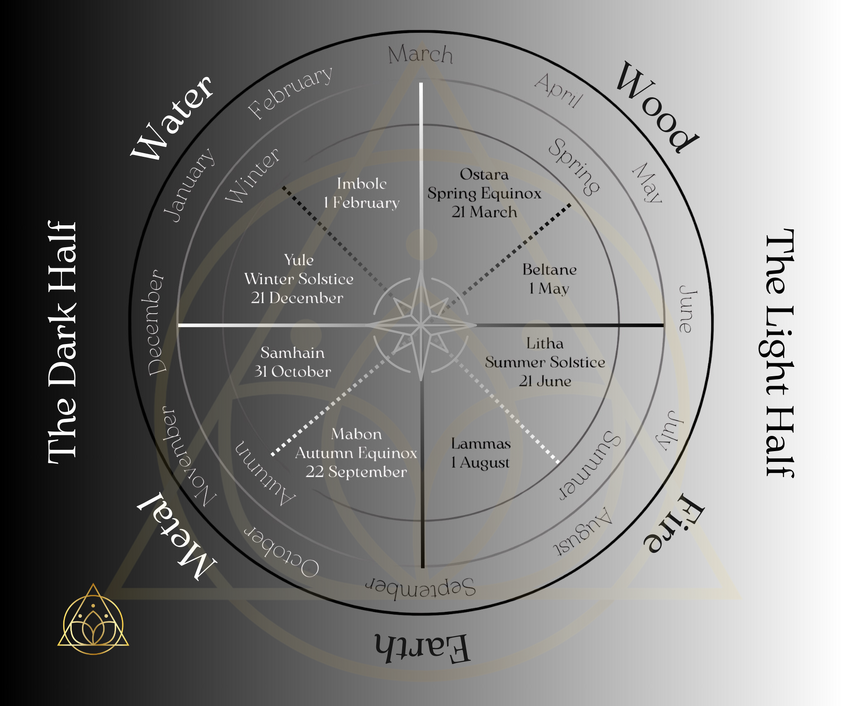
If we begin at Samhain and move around the wheel, the full cycle of the year gradually unfolds.
Samhain, on 31 October, marks the beginning of the darker half of the year. The harvest has been gathered, fields are cleared, and the natural world begins to slow. Trees release their remaining leaves and growth above the ground comes to a close. In many traditional societies this point marked the completion of the agricultural year and the movement into the winter months.
Within the Five Element cycle this stage reflects the influence of Metal. Metal corresponds with autumn and with the process of refinement and release. The landscape simplifies as vegetation dies back and resources are conserved for the colder months ahead. In Traditional Chinese Medicine the Metal element is associated with the lungs and large intestine, organs linked with exchange and elimination. The seasonal theme of release can therefore be seen both in nature and in the body.
From Samhain the wheel moves towards the Winter Solstice at Yule on 21 December. This is the longest night of the year and the deepest point of winter. Although it marks the darkest moment of the cycle, it is also the turning point at which the light begins its gradual return.
This stage of the year corresponds with the Water element. Water represents winter, conservation and the storing of energy. Much of the natural world withdraws during this period. Seeds remain dormant beneath the soil and animals reduce activity in order to conserve resources. In the body the Water element corresponds with the kidneys and bladder, with the kidneys in particular regarded in Traditional Chinese Medicine as the storehouse of essential vitality.
As the days slowly lengthen the cycle moves towards Imbolc on 1 February. Although winter still holds the landscape, Imbolc marks the first clear indication that the season is beginning to shift. The increasing daylight becomes noticeable and the earliest signs of life begin to appear. In many parts of the countryside this period coincides with the start of lambing season and the first shoots emerging from the ground.
Imbolc sits at the transition between the stillness of Water and the rising movement of Wood. Energy that has been stored during winter begins to mobilise again, preparing the conditions for the visible growth that will follow in spring.
The balance point of the year arrives at Ostara, the Spring Equinox on 21 March. At this moment day and night are equal in length. From this point the lighter half of the year begins to dominate and the influence of the Wood element becomes increasingly visible.
Wood represents spring, growth and forward movement. Across the landscape buds open on the trees, grass thickens and plants begin their most active period of development. In the body the Wood element corresponds with the liver and gall bladder and is linked with the smooth movement of energy through the muscles and connective tissues. The qualities associated with Wood include direction, initiative and the capacity to move forward.
From Ostara the wheel continues to Beltane on 1 May. Beltane represents the height of spring when growth becomes strong and vigorous. The energy that first appeared as subtle movement at Imbolc is now clearly expressed across the natural world. Trees are in leaf, flowers begin to appear and wildlife activity increases.
During this stage the influence of the Fire element begins to rise. Fire represents warmth, vitality and outward expression. As the days lengthen and temperatures increase, the natural world becomes more active and dynamic.
This expansion reaches its peak at Litha, the Summer Solstice on 21 June. This is the longest day of the year and the point at which solar energy is at its greatest. The Fire element is fully expressed at this time, reflecting the warmth, brightness and activity of high summer. Vegetation is abundant, wildlife is highly active and the landscape shows the fullest expression of growth.
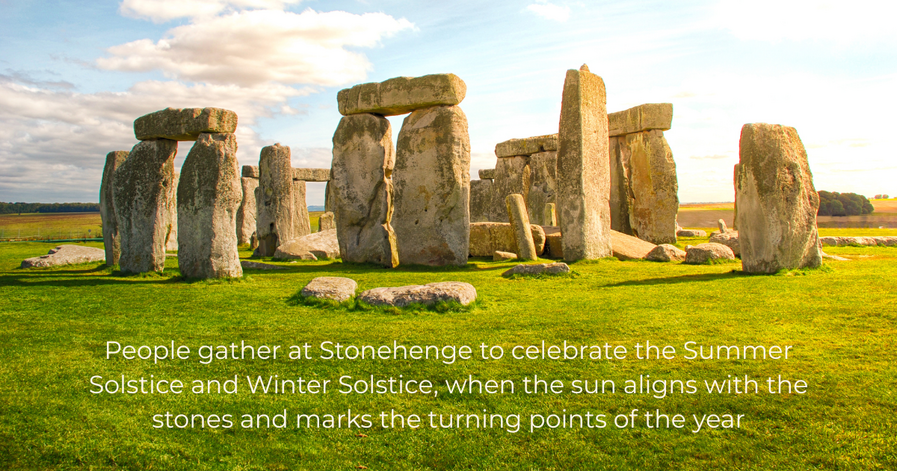
Following the Summer Solstice the direction of the cycle gradually changes. Although the days remain long and warm, the year begins to move from expansion towards harvest.
This shift becomes clear at Lammas, or Lughnasadh, on 1 August. Lammas marks the first harvest festival of the year when grain crops ripen and the land begins to provide the results of the growth that has taken place throughout spring and early summer.
This stage corresponds with the Earth element. Earth represents nourishment, stability and integration. Within the body it is associated with the spleen and stomach, organs responsible for digestion and the transformation of food into usable energy. The symbolism of harvest reflects this process directly, as the crops that have grown through the year are gathered and prepared for nourishment.
From Lammas the cycle moves towards the Autumn Equinox at Mabon on 22 September. Once again day and night stand in equal balance, but now the darker half of the year begins to return. Harvests are completed, leaves begin to change colour and the landscape gradually prepares for winter.
The qualities of Metal begin to reappear as the cycle moves back towards Samhain. The natural world enters another period of clearing and refinement, releasing what is no longer required before the return of winter.
The Wheel of the Year and the Five Elements describe the same continuous rhythm of transformation. Winter stores energy beneath the surface. Spring directs that energy into growth. Summer expresses it fully. Late summer provides nourishment and stability. Autumn refines and releases before the cycle begins again.
Rather than moving in straight lines, the year turns like a wheel. Each phase prepares the conditions for the next, creating the repeating seasonal rhythm that has shaped the natural world for generations.
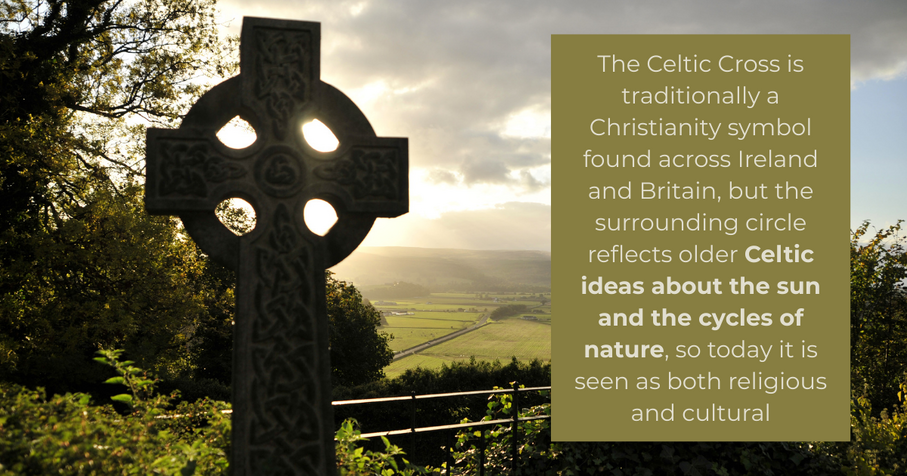
Seen together, the Wheel of the Year and the Five Elements offer two ways of describing the same natural rhythm. One tradition marks the turning points of the agricultural year through seasonal festivals, while the other explains the qualities of change through elemental movement. Although they developed in different parts of the world, both recognise that life unfolds through repeating cycles rather than fixed stages.
The Celtic calendar reflects the visible changes taking place in the landscape, while the Five Elements describe the underlying patterns that drive those changes. When placed side by side, as shown in the diagram, they reveal a shared understanding of how the year moves from rest to growth, from expansion to harvest, and eventually back toward restoration again.
This cyclical view of time reminds us that nature does not operate in straight lines. Periods of activity are always followed by periods of consolidation, and growth is balanced by moments of release. Each phase of the year carries a specific purpose within the wider pattern.
Understanding these seasonal rhythms provides a useful way of observing the relationship between the natural world and human life. The same processes that shape the land are reflected in the body and in daily experience. By recognising where we are within the cycle, it becomes easier to appreciate the natural ebb and flow that accompanies change.
In this way the Wheel of the Year and the Five Elements do more than mark the passage of time. Together they illustrate a shared principle found across many traditional cultures: that life moves through cycles of transformation, each one preparing the conditions for the next turn of the wheel.

Comments